New Global Trade Map: Supply Chains Rewritten in 2026
Tariff escalations reshuffled over $400 billion in trade flows in 2025 alone as nearshoring and friendshoring accelerate, reshaping investment patterns worldwide.
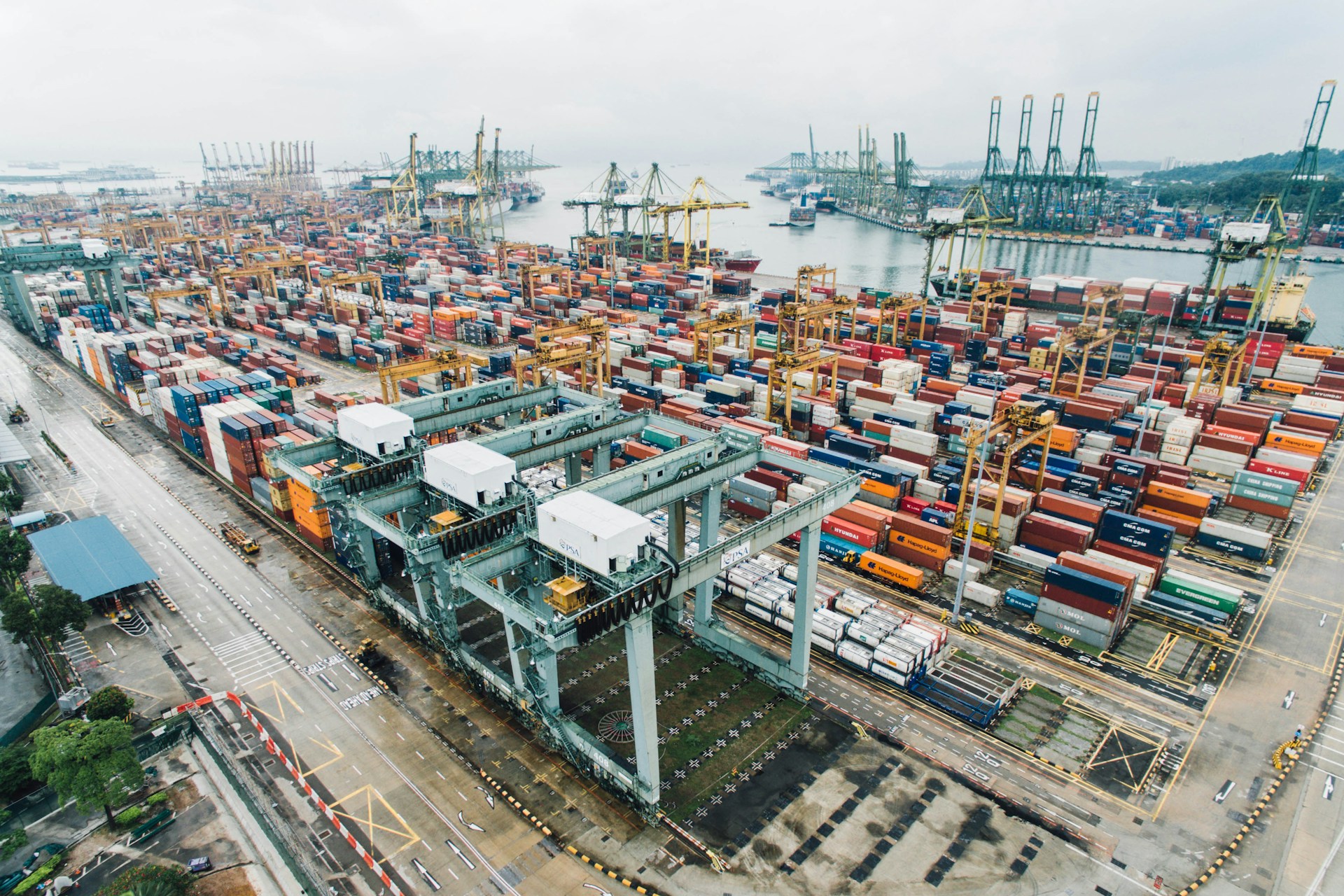
Photo by CHUTTERSNAPon Unsplash
As trading desks open in New York and London on 11 March 2026, analysts are tracking another wave of supply-chain announcements tied to Mexico’s fresh tariff regime and ongoing US industrial-policy spending. Tariff escalations alone reshuffled more than $400 billion in global trade flows in 2025 according to the World Economic Forum, the clearest signal yet that resilience has overtaken cost as the dominant design principle for global value chains.
Table of Contents
- The Core Drivers Behind the Rewrite
- Policy and Tariff Impacts on Trade Flows
- Emerging Winners and Regional Hotspots
- How Companies Are Adapting Operations
- Forward Risks and Conditional Outlook
The Core Drivers Behind the Rewrite
What are the primary forces rewriting the global trade map right now?
The dominant forces are geopolitical fragmentation and national industrial policies. The World Economic Forum notes that over 3,000 new trade and industrial-policy measures were introduced in 2025 alone—roughly 3.5 times the annual average from a decade earlier. These measures, combined with tariff actions, have already redirected more than $400 billion in trade flows. At the same time, slower and uneven global growth is forcing companies to redesign networks around constrained supply, energy availability and localized demand rather than chasing the lowest-cost producer anywhere in the world.
How significant has the shift toward nearshoring and friendshoring actually become?
It has moved from a niche strategy to standard operating practice. Supply-chain leaders report a nearly 300 percent increase in regionalizing production decisions compared with five years ago. Nearshoring to Mexico and friendshoring within trusted blocs now appear in the majority of corporate reconfiguration plans. The goal is no longer pure efficiency but optionality—dual sourcing, modular designs and the ability to pivot production quickly when policy or disruption strikes.
Policy and Tariff Impacts on Trade Flows
What concrete policy actions have accelerated these changes in 2026?
Two US laws stand out: the CHIPS and Science Act and the Inflation Reduction Act. Together they have triggered over $640 billion in announced private semiconductor and clean-energy supply-chain investments across more than 140 projects in 30 states. On the trade side, Mexico implemented sweeping new tariffs effective 1 January 2026 on roughly 1,463 product lines from non-FTA countries, with rates reaching as high as 50 percent on selected Chinese goods. These moves directly target back-door routing and align Mexico more closely with US priorities ahead of the USMCA review.
Advertisement
How have these policies affected China-centric supply chains?
China’s trade surplus hit a record $1.2 trillion in 2025 as exports to the United States fell 20 percent to $419.5 billion. Exporters pivoted aggressively toward Africa, Southeast Asia and Latin America, where shipments grew 25.8 percent, 13.4 percent and 7.3 percent respectively. The net result is faster fragmentation: traditional long-haul Asia-to-West flows are being replaced by shorter, more regional corridors even as overall global trade volume remains resilient.
Emerging Winners and Regional Hotspots
Which countries and regions are gaining the most from the reconfiguration?
Mexico has solidified its position as the top US trading partner, benefiting from nearshoring in autos, electronics and apparel. Vietnam, India and ASEAN members are capturing friendshoring flows in semiconductors, textiles and consumer goods. Within the United States, the “battery belt” across former industrial states and new semiconductor clusters in Arizona, Ohio and Texas are seeing direct investment surges. South-South trade continues to expand rapidly, with developing-country exports to other developing markets now accounting for 57 percent of their total merchandise exports.
Can you show the scale of these shifts in a simple comparison?
Here is a snapshot of key 2025-2026 indicators:
| Metric | 2025-2026 Status | Source |
|---|---|---|
| Tariff-reshuffled trade flows | Over $400 billion | World Economic Forum |
| New trade & industrial measures | More than 3,000 | World Economic Forum |
| US semiconductor investments announced | $640 billion+ | SEMI / SIA |
| China 2025 trade surplus | Record $1.2 trillion | USCC |
| Mexico tariffs on non-FTA goods | 1,463 lines effective Jan 2026 | Mexican government decree |
| Global trade growth projection | 2.6 percent | UNCTAD |
The table underscores the breadth of the policy-driven reallocation underway.
Advertisement
How Companies Are Adapting Operations
How are multinational companies actually redesigning their footprints?
Most are adopting a “China-plus” or “multi-regional” model rather than full decoupling. Dual sourcing, nearshoring for North American markets and friendshoring within trusted alliances have become the norm. AI adoption is accelerating these shifts: early users report up to 15 percent lower logistics costs, 25 percent shorter lead times and 35 percent inventory reductions. Modular and prefabricated production techniques are also spreading, allowing faster scaling in new locations.
What practical steps should investors watch for in corporate filings?
Look for disclosures on capital expenditure in Mexico and Vietnam, expanded supplier audits for geopolitical risk, and increased spending on digital visibility tools. Companies that publicly commit to resilience metrics—such as percentage of supply from allied nations or inventory days on hand—are signalling a structural rather than temporary change. Earnings calls in 2026 increasingly reference “policy foresight” as a core competitive advantage.
Forward Risks and Conditional Outlook
What are the biggest remaining risks in this new trade map?
Persistent electricity and critical-minerals constraints, sudden tariff escalations and the digital divide in developing regions top the list. Smaller economies without strong infrastructure or skills risk being sidelined. Currency volatility in frontier markets and the possibility of retaliatory export controls on rare earths or advanced chips also remain live concerns.
If industrial-policy momentum and geopolitical risk aversion continue at current levels, then regional trade blocs anchored by the United States, the European Union and China will dominate global patterns through the end of the decade, with shorter, more resilient—but also more expensive—supply chains becoming the new normal.
Source: https://reports.weforum.org/docs/WEF_Global_Value_Chains_Outlook_2026.pdf
Continue reading
Jump back to the Market Lens homepage for the latest coverage.
Go to Market LensLatest Articles
View all01 | Market Pulse
CSE close: ASPI -0.39%, breadth negative on 2026-06-02
Trade date June 02, 2026
02 | Market Pulse
CSE close: ASPI +0.11%, breadth positive on 2026-05-27
Trade date May 27, 2026
03 | Market Pulse
CSE close: ASPI -0.85%, breadth negative on 2026-05-26
Trade date May 26, 2026
04 | Market Pulse
CSE close: ASPI +1.98%, breadth positive on 2026-05-25
Trade date May 25, 2026